
Who Actually Creates a Movie Set? Production Designer vs. Set Decorator Explained
From Barbie's Dreamhouse to the grand rooms of Anna Karenina, creating a movie world takes an army. Here's the difference between a production designer, set decorator and the teams that physically build the environments we see on screen.
When you walk into a movie set, almost everything around the actors has been chosen for a reason.
The wallpaper.
The furniture.
The lamps.
The artwork.
The books on a shelf.
The dishes sitting on a table.
Even the clutter hiding in the corner of a room.
Someone had to decide what that world should look like.
But who actually does it?
The answer isn't simply "the set designer."
Two of the most important roles behind the physical worlds we see on screen are the production designer and set decorator.
Their jobs are closely connected, but they aren't the same.
What Does a Production Designer Do?
Think of the production designer as one of the principal architects of a movie's visual world.
Working closely with the director and cinematographer, the production designer helps establish the overall visual language of the production.
What should the world look like?
What colors dominate it?
What period are we in?
How should a location make the audience feel?
Does the environment look pristine, chaotic, wealthy, neglected, futuristic or lived-in?
Those decisions eventually influence everything from architecture and construction to paint colors and the objects placed inside a room.
The production designer oversees the art department responsible for transforming those ideas into physical environments.
What Does a Set Decorator Do?
Once the environment has been designed, it needs to feel inhabited.
That's where set decoration becomes crucial.
The set decorator is responsible for helping select, source and arrange many of the objects that occupy the environment.
Furniture.
Lamps.
Rugs.
Curtains.
Artwork.
Books.
Decorative objects.
Office equipment.
Kitchenware.
And countless other pieces that make a room feel believable.
These objects are commonly referred to as set dressing.
A production designer might establish the visual concept for a character's apartment.
The set decorator helps fill that apartment with the physical objects that tell us who lives there.
Imagine Building a Character's Bedroom
Suppose a script calls for the bedroom of a teenager growing up in 1985.
The production designer may establish the room's overall appearance.
Its architecture.
Its color palette.
Its layout.
Its relationship to the rest of the house.
Then comes the enormous task of making that room feel like someone actually lived there in 1985.
What posters are on the walls?
What alarm clock sits beside the bed?
What books are on the shelf?
What lamp would the family have purchased?
Is the furniture new or handed down?
Are there trophies?
Records?
Photographs?
Clothes on the floor?
Each object adds information.
Most viewers will never consciously notice all of those decisions.
But together, they make the world believable.
Barbie Is an Extreme Example
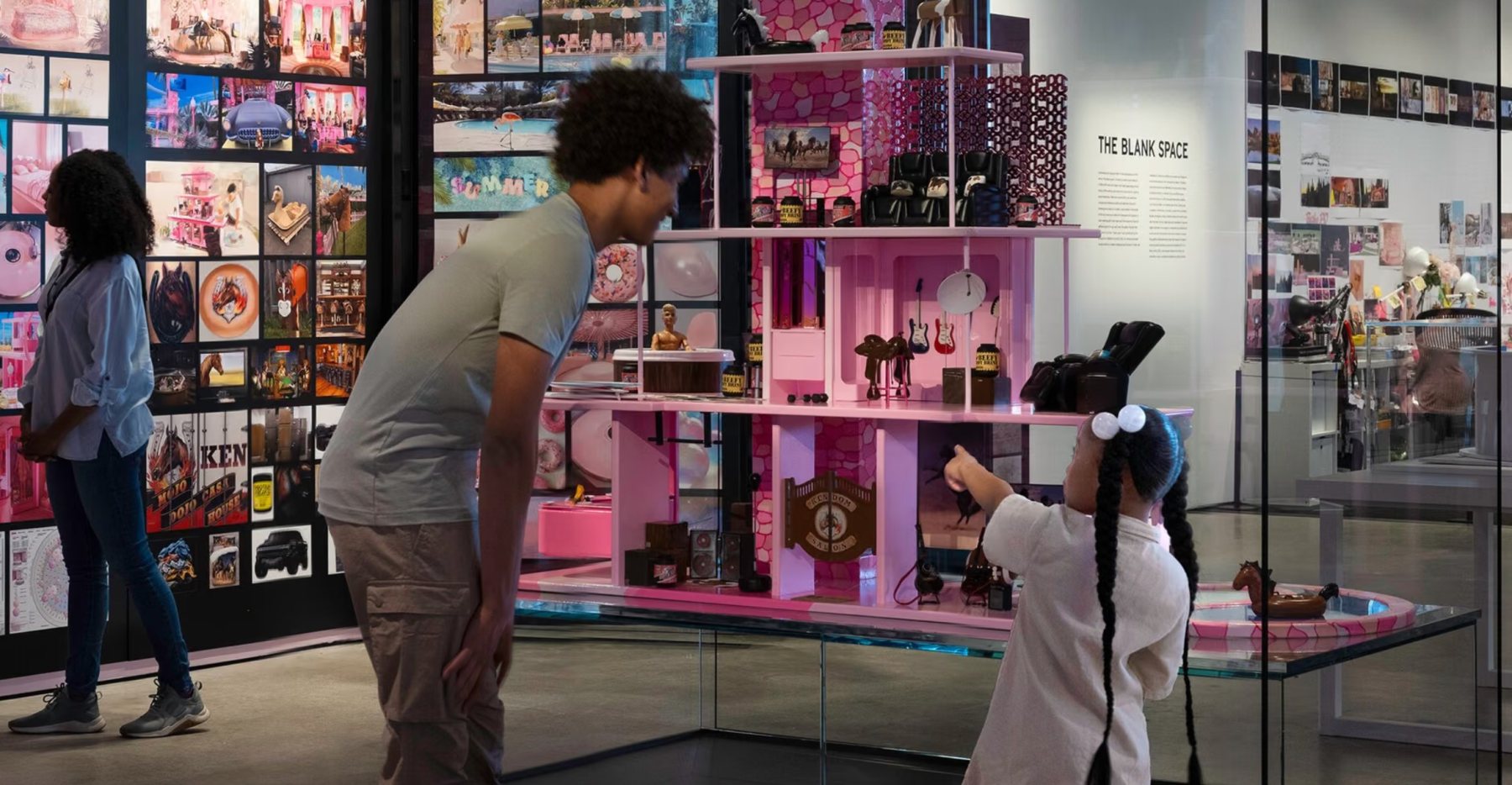
Few recent movies demonstrate the power of production design more clearly than Barbie.
Production designer Sarah Greenwood and set decorator Katie Spencer helped create the film's enormous pink world.
Barbie Land couldn't simply look like a collection of toys.
It had to feel simultaneously artificial, familiar and large enough for real actors to inhabit.
The architecture, furniture, objects and colors all had to work together.
The result was a world audiences could recognize almost immediately.
Greenwood and Spencer received an Academy Award nomination for their work on the film.
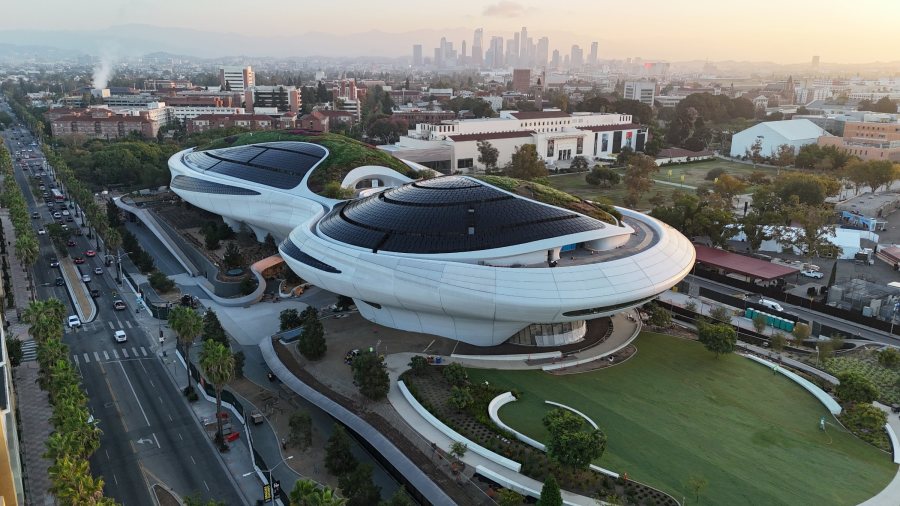
Their collaboration is currently the subject of an Academy Museum exhibition titled Barbie to Anna Karenina: The Cinematic Worlds of Sarah Greenwood and Katie Spencer.
From Barbie to Anna Karenina
The exhibition demonstrates just how dramatically the same creative team can transform its approach from one production to another.
Barbie required a heightened fantasy world filled with saturated colors and intentionally artificial environments.
Anna Karenina required something completely different.
Other collaborations between Greenwood and Spencer include Pride & Prejudice, Atonement, Darkest Hour, Beauty and the Beast, Sherlock Holmes and Cyrano.
Each production required its own visual language.
That's the job.
Not simply creating beautiful rooms, but creating the correct world for the story.
Where Do All Those Objects Come From?
This is where movie sets become especially interesting from a production-asset perspective.
A single room may contain hundreds of physical objects.
Some are purchased specifically for the production.
Some are rented.
Some are fabricated.
Others may come from prop houses or existing studio inventory.
Certain objects may need duplicates.
Something intended to be broken during a scene might require several identical versions.
An object handled prominently by an actor may receive far more attention than something sitting deep in the background.
Multiply that across dozens—or hundreds—of sets and locations and the physical footprint of a production can become enormous.
Props vs. Set Dressing
Collectors sometimes use the word "prop" to describe almost anything that came from a movie production.
Within filmmaking, the terminology can be more specific.
A hand prop is generally something intended to be handled or used by a performer.
Set dressing helps furnish and decorate the environment.
A telephone sitting on a desk might begin as set dressing.
If an actor picks it up and uses it extensively during a scene, responsibility for it can overlap with the property department depending on the production.
The exact boundaries can vary, but the distinction matters when documenting production assets later.
Understanding what an object actually did on set can become part of understanding its history.
What Happens When Filming Ends?
Eventually the director calls wrap.
The actors leave.
The cameras move on.
And the physical world built around them has to go somewhere.
Sets may be struck remarkably quickly.
Rented items are returned.
Reusable studio inventory may go back into storage.
Certain hero objects or historically important pieces can be archived.
Other purchased or fabricated assets may be stored, transferred, sold, donated, recycled or disposed of depending on the production.
That process can involve an extraordinary amount of material.
A room that looked completely natural on screen may have been assembled from dozens of different sources and can disappear almost as quickly as it was created.
The Afterlife of Set Dressing
Years later, those objects can take on a completely different identity.
A chair is no longer simply a chair.
It may have occupied the office of a famous television character.
A lamp may be recognizable in the background of dozens of scenes.
A framed picture might help identify the exact set where it appeared.
This is where documentation becomes important.
Production labels, inventory information, photographs and provenance can help establish where an object came from long after the set itself has disappeared.
Without that context, an ordinary household object can become nearly impossible to distinguish from millions of others just like it.
An Invisible Art Form
Great production design often succeeds precisely because audiences stop noticing it.
We accept the world.
We believe the characters live there.
We believe the restaurant exists.
We believe the office has operated for decades.
We believe Barbie really has a Dreamhouse.
That illusion may last only a few minutes on screen.
But behind it can be months of design, construction, sourcing, decorating and fabrication.
And when filming ends, thousands of those physical pieces begin another journey entirely.
Some disappear.
Some are reused.
Some survive in warehouses.
And occasionally, decades later, a surviving piece allows us to look back and understand exactly how that imaginary world was built.