

New to Collecting Movie Props? Here Are the Terms You Need to Know
Hero prop? Stunt version? Production used? Screen matched? If you're new to collecting film and television memorabilia, the terminology can be confusing. Here's a beginner-friendly guide to what it all means.
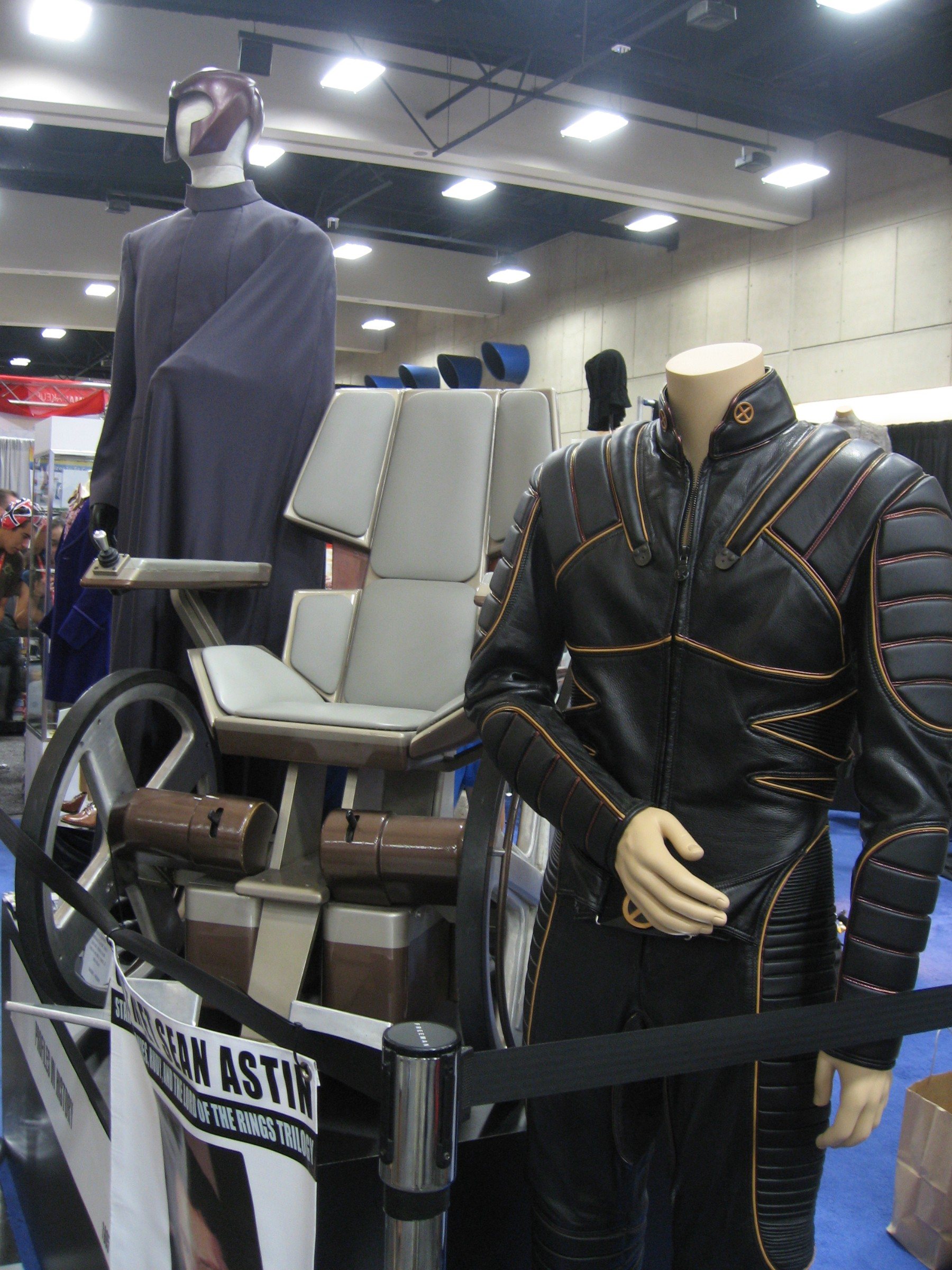
Getting into film and television memorabilia for the first time can feel like learning another language.
Hero.
Stunt.
Production used.
Screen matched.
Production acquired.
Set dressing.
Distressed.
Prototype.
You'll see these terms constantly when looking at props, costumes and other production material — but they don't all mean the same thing.
Understanding the terminology can help you know exactly what you're adding to your collection and, more importantly, what questions you should be asking before you buy.
Here are some of the most common terms every new collector should know.
Hero Prop
A hero prop is generally one of the highest-quality versions of a prop created for use during filming.
Hero versions are often intended to be seen clearly by the camera or handled closely by a principal actor. Because of that, they may contain more detail, better finishes or working features that wouldn't be necessary on a background or stunt version.
Imagine a character holding a futuristic device directly in front of the camera.
The detailed version used for that close-up could be considered a hero prop.
But there's an important distinction:
"Hero" describes the type or quality of the prop. It does not automatically prove that a particular example appeared in the final cut of the film.
There may also be multiple hero versions created for a production.
Stunt Prop
Stunt props are generally created with performer safety and durability in mind.
A realistic metal weapon, for example, might have a lightweight rubber or foam counterpart for fight scenes.
A heavy object that needs to be thrown at an actor might be recreated using a softer material.
From a distance, the stunt version may look nearly identical to the hero version.
Up close, the differences can be dramatic.
That doesn't make a stunt prop "less real." If it was created for and used by the production, it's still an authentic production artifact — it simply served a different purpose.
Hero vs. Stunt
This is one of the first distinctions new collectors usually encounter.
A HERO VERSION might prioritize:
• Detail • Realistic materials • Close-up appearance • Functionality • Fine finishing
A STUNT VERSION might prioritize:
• Safety • Lightweight construction • Flexibility • Durability • Performer movement
Depending on the scene, a production may switch between the two without audiences ever noticing.
Screen Used
"Screen used" generally means the specific item was used during filming in material that appears on screen.
It is one of the most recognizable terms in collecting — but collectors should still ask how that conclusion was established.
Documentation, studio provenance, wardrobe records, continuity photographs and other production information can all contribute to an item's attribution.
And then there is an even more specific term.
Screen Matched
Screen matching is one of the strongest ways of connecting an individual physical object to what appears in finished footage or verified production imagery.
A screen match happens when unique characteristics of an item can be compared with what appears on screen.
Those characteristics might include:
• A specific scratch • Fabric wear • A stain • Paint patterns • Distressing • A repair • Stitching • A chip or crack • The placement of individual markings
If those unique characteristics correspond to the object visible in the film or episode, the piece may be screen matched.
This can sometimes allow collectors to connect an item to a very specific scene.
Production Used
"Production used" is broader than "screen used."
It generally describes something that was used during the making of a production, but that does not necessarily mean the item is clearly visible in the finished film or television episode.
Productions create and use enormous quantities of material that audiences may never notice.
An item might have been used:
• During rehearsals • On set • By a department • During fittings • For camera tests • In scenes that were deleted • In scenes where the item isn't identifiable on camera
It's still part of the physical production history.
Production Made
A production-made item was created for the production.
However, being made for a movie does not automatically mean it was ultimately used during filming.
Productions frequently create:
• Extras • Backups • Test versions • Alternate versions • Unfinished pieces
Some may never leave the prop department.
That's why "production made" and "screen used" should never automatically be treated as interchangeable terms.
Production Acquired
This is a term you'll see frequently at Icons of Pop Culture.
"Production acquired" means the piece came from the production or an associated production source, but we are not making an unsupported claim that the specific piece can be proven to have appeared on screen.
For example, a television production may have hundreds or thousands of pieces of wardrobe when filming ends.
Some may have excellent character or actor identification.
Others may have limited documentation.
Rather than turn a possibility into a fact, "production acquired" allows the item's connection to the production to be described without overstating its screen use.
For a collector, that's an important distinction.
Backup or Duplicate
Film productions rarely rely on a single copy of something important.
If a prop is essential to a scene, losing or damaging the only example could stop filming.
Productions may therefore create multiple nearly identical versions.
Costumes can also have duplicates.
A character might need:
• A clean version • A distressed version • A stunt version • A duplicate for another filming unit • Several identical shirts for continuity • Multiple sizes for doubles or stunt performers
Finding two authentic examples of the "same" movie prop does not necessarily mean one is fake.
There may have been several.
Prototype
Before the final prop exists, someone has to figure out how to make it.
A prototype is an earlier developmental version used while designers and fabricators work out the final design.
Prototypes can sometimes look quite different from what ultimately appears on screen.
For collectors interested in the filmmaking process, prototypes can be particularly fascinating because they reveal how an idea evolved.
Practical Prop
A practical prop physically exists on set and can be handled or photographed by the camera.
Sometimes the term is used to distinguish a physical object from something created entirely through visual effects.
Practical pieces may still be enhanced digitally in the finished production.
Breakaway Prop
Ever wonder how somebody can smash a bottle over another character's head?
Hopefully, they're not using the same bottle you pulled from your refrigerator.
Breakaway props are designed to break safely and predictably.
Glass may be replaced by specialized materials. Furniture, doors, walls and other objects can also be constructed specifically to collapse or break during a scene.
Because they are meant to be destroyed, surviving examples can sometimes be unusual.
Background Prop
Not every prop is meant for the spotlight.
Background props help make a fictional world believable.
Think about:
• Food packaging • Office paperwork • Books • Store merchandise • Photographs • Signs • Magazines • Bottles • Desk accessories
Individually, they might only appear for seconds — or be barely visible at all.
But collectively, they're what make a movie set feel like a real place.
And sometimes a seemingly insignificant background object becomes surprisingly recognizable to fans.
Set Dressing
Props are generally objects actors interact with.
Set dressing is used primarily to create and decorate the environment surrounding them.
A living room might contain:
Furniture Artwork Lamps Books Curtains Rugs Decorations Photographs
Those objects help define where a character lives and who that character is.
The distinction between a prop and set dressing can sometimes become blurry, especially if an actor begins interacting with an object that was originally placed simply to dress the set.
Wardrobe
Wardrobe refers to clothing associated with a production.
That may include pieces specifically manufactured for the production as well as ordinary commercially available clothing purchased by the costume department.
A screen costume doesn't have to be custom made.
A pair of jeans bought from a regular clothing store can become an important piece of production history once it's selected, fitted and associated with a character.
Studio Distressing
That bloodstain might not be an accident.
Costume and prop departments frequently intentionally age, damage or alter pieces to make them fit the story.
This is known as distressing.
It can include:
• Artificial dirt • Fake blood • Tears • Burns • Paint • Fading • Scuffing • Sweat effects • Repairs
Collectors should be careful not to mistake deliberate studio distressing for damage that occurred after production.
Sometimes the "damage" is exactly what makes the piece recognizable.
Continuity
Movies aren't necessarily filmed in the order you watch them.
A scene that lasts two minutes on screen might be filmed over multiple hours or days.
Continuity departments help ensure that everything stays consistent.
If a character's jacket is unzipped halfway in one shot, it needs to be positioned correctly when filming continues from another angle.
Continuity photography and records can become incredibly useful when researching production wardrobe and props.
Wardrobe Tags
One of the first things experienced collectors often inspect is the inside of a costume.
Wardrobe departments frequently add tags, labels or handwritten information to keep clothing organized.
Depending on the production, a tag could contain:
• Character name • Actor name • Episode number • Scene number • Costume number • Change number • Production code • Size information
These markings can provide important clues about a piece's production history.
But remember: practices differ from production to production.
There is no single universal wardrobe-tag system used across Hollywood.
COA — Certificate of Authenticity
A Certificate of Authenticity, usually called a COA, accompanies many collectible pieces.
But collectors should understand something important:
The piece itself and its provenance matter more than a fancy piece of paper.
A useful COA should clearly identify what the item is and who is standing behind its authenticity.
Collectors should always consider the source of an item, its documented history and any supporting production information alongside the certificate.
Provenance
This might be the most important word in the entire hobby.
Provenance is the documented history of an object.
In simple terms:
Where did it come from?
A strong chain of provenance can help establish how a prop or costume left a production and eventually entered the collector market.
That might involve studios, production companies, crew members, costume houses, archives, collectors or other legitimate sources.
The stronger and clearer that history is, the more confidently a collector can understand what they're buying.
The Most Important Rule: Read the Description
Terms are useful, but they aren't magic words.
There isn't a single worldwide authority assigning every movie prop an official classification, and terminology can sometimes vary between productions, collectors and sellers.
Don't buy something simply because the word "hero" appears in the title.
Read the description.
Look at the photographs.
Examine the tags.
Understand the provenance.
Ask what is actually known about the piece.
And pay attention to the difference between what has been proven and what has simply been assumed.
Welcome to the Hobby
One of the best parts of collecting film and television memorabilia is discovering how much work exists behind what eventually appears on screen.
A five-second scene may involve dozens of artists, technicians and craftspeople.
And every costume, prop and piece of set dressing has its own small place within that process.
Once you start recognizing the terminology, you'll probably start watching movies differently too.
Instead of simply seeing a character holding a prop, you may find yourself wondering:
Was that the hero?
Was there a stunt version?
How many did they make?
And somewhere along the way, that's usually when the collecting bug really begins.