
The Sound of Music Gets a Museum — and Its Movie History Comes Home to Salzburg
More than 60 years after The Sound of Music was filmed in Salzburg, a new museum at Hellbrunn brings together original props, costumes and nearly 450 objects while telling the story of both the Hollywood classic and the real von Trapp family.
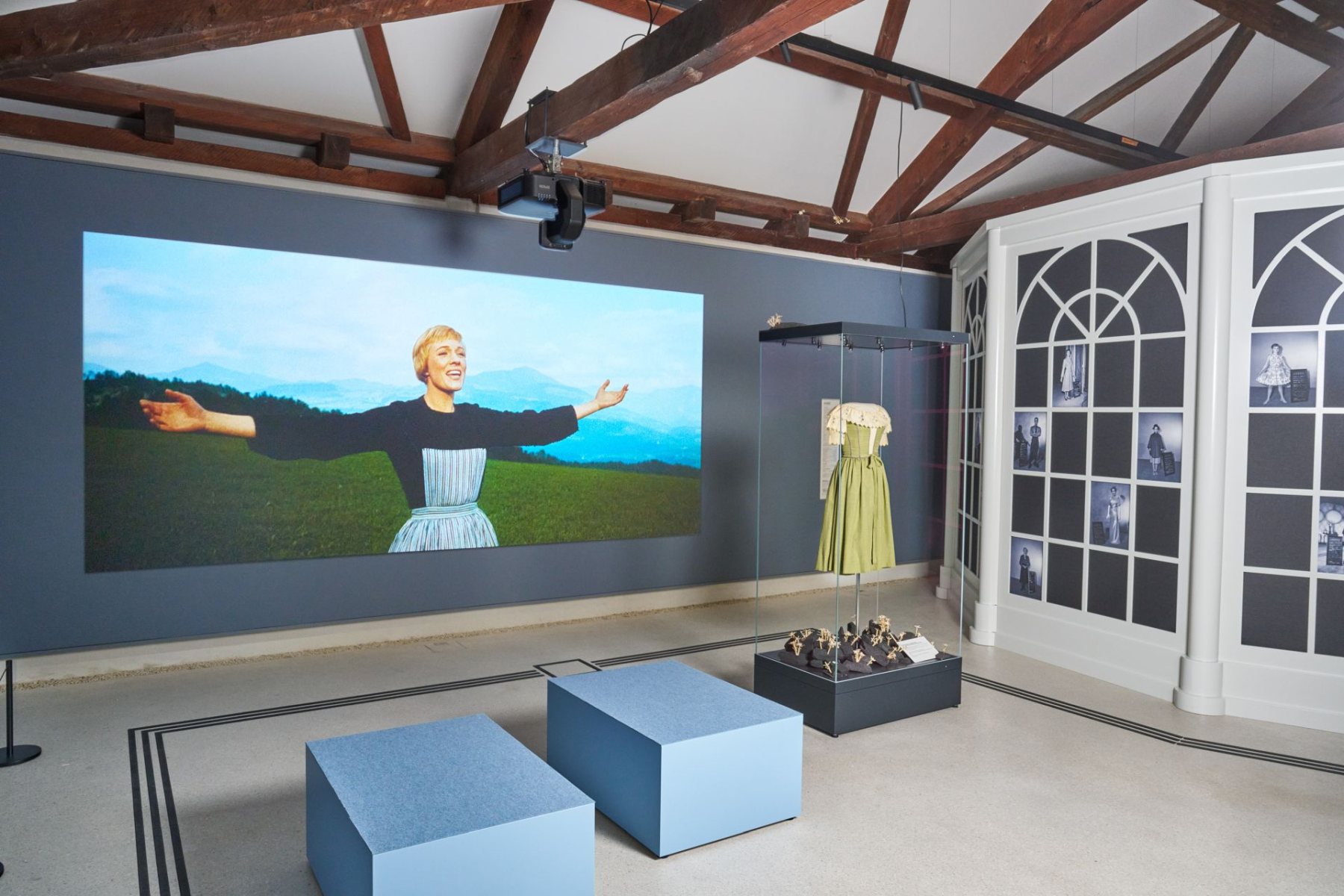
More than 60 years after Julie Andrews walked across an Austrian hillside and helped turn Salzburg into one of the most recognizable locations in movie history, The Sound of Music finally has a museum of its own.
Sound of Music Salzburg officially opened September 20, 2026, at Hellbrunn in Salzburg, Austria.
Inside are nearly 450 objects connected with the film and the story that inspired it, including props, costumes, movie posters, recordings and historical material connected with the real von Trapp family.
But what makes this museum particularly fascinating isn't simply what is inside the display cases.
It is where those objects have returned.
Hollywood Comes Back to Salzburg
The Sound of Music was released in 1965, but much of the world audiences saw on screen wasn't created on a Hollywood soundstage.
It was Salzburg.
The city's gardens, palaces, streets and surrounding mountains became part of the movie's identity.
Six decades later, hundreds of thousands of fans continue traveling to Salzburg each year because of the film.
Now those visitors have somewhere dedicated to telling the complete story.
Sound of Music Salzburg is housed at Hellbrunn, one of the locations associated with the production and already home to one of the film's most recognizable surviving pieces.
The gazebo.
The Gazebo That Became a Movie Landmark
Even someone who hasn't watched The Sound of Music in years may recognize it.
The glass gazebo is associated with one of the movie's best-known musical sequences, "Sixteen Going on Seventeen," performed by Liesl and Rolf.
What began as part of a movie production eventually became a tourist destination.
The gazebo was moved to Hellbrunn in 1991, where it has remained a destination for fans traveling through Salzburg.
Today it sits beside a museum devoted to preserving the story surrounding it.
It is a remarkable example of what can happen to a production asset after filming ends.
An object built to appear in front of a camera can eventually become a landmark.
Nearly 450 Pieces of History
The new museum contains nearly 450 objects.
Visitors can see film props and costumes alongside posters, music recordings and historical material.
That combination is important.
Rather than presenting The Sound of Music only as a beloved Hollywood production, the museum explores several different versions of the story.
There is the real von Trapp family.
There is Maria von Trapp's memoir.
There is the Broadway musical.
And then there is the 1965 Hollywood movie that introduced the story to millions of people around the world.
Those versions aren't always identical.
The Real Family Behind the Movie
One of the museum's goals is to separate Hollywood storytelling from historical reality.
The real von Trapp family inevitably changed as their story moved from real life to page, stage and eventually screen.
Even the children's names were changed.
Elisabeth von Trapp, granddaughter of Georg and Agathe von Trapp, attended the museum's opening and pointed out one particularly personal example.
Her father was Werner von Trapp.
Movie audiences know the corresponding character as Kurt.
Other elements were altered or simplified as well.
That doesn't diminish the movie.
Instead, it provides a fascinating opportunity to see how filmmakers adapt real history into a story designed for the screen.
When a Costume Becomes Historical Evidence
This is where surviving movie costumes and props become particularly interesting.
A costume can tell two stories simultaneously.
First, it represents the fictional world audiences saw in the movie.
But it can also document how that world was physically created.
Turn a costume inside out and you may find labels, alterations, repairs or construction details that were never intended to be visible to an audience.
A prop can reveal materials, fabrication methods and details that disappeared once photographed.
Those characteristics become increasingly valuable as decades pass and the people who originally created the objects are no longer available to explain them.
Physical production material becomes evidence.
Movie Props Weren't Made for Museums
There is something wonderful about seeing a movie prop behind museum glass because that was almost never its intended destination.
Props are working objects.
Costumes are working garments.
Set dressing exists to fill the environment around performers.
During production, their value comes from what they contribute to the image being captured by the camera.
Once filming ends, their future can become uncertain.
Some pieces are archived.
Others return to rental houses.
Costumes may be altered and reused.
Sets are dismantled.
Props can be stored, sold, donated or discarded.
Occasionally an object survives long enough to take on an entirely different meaning.
From Production Asset to Cultural Artifact
The Sound of Music is now more than six decades old.
That passage of time changes the way we look at surviving material from the production.
A costume is no longer simply wardrobe.
A prop isn't simply something an actor once held.
Together, these objects document how one of Hollywood's most enduring films was physically created.
The new museum gives those surviving pieces context by placing them alongside historical photographs, recordings and the story of the real family that inspired the movie.
And perhaps most importantly, it does so in Salzburg.
Returning Movie History to Where It Happened
There is something particularly fitting about The Sound of Music's surviving history returning to the place where so much of the movie was created.
Visitors can study the film inside the museum and then walk outside into the landscape that helped make it famous.
They can see the gazebo.
They can explore Salzburg.
They can compare Hollywood's interpretation with the actual history of the von Trapp family.
It creates a connection between a movie, its physical artifacts and the real place behind the story.
For collectors and preservationists, that connection is important.
Movie props and costumes are sometimes dismissed as memorabilia.
But when preserved with their history intact, they can become something more.
They become records of filmmaking.
And occasionally, they make their way home.