
Wednesday Season 3 Has Wrapped — What Happens to Nevermore's Props and Costumes?
Netflix has confirmed that Wednesday Season 3 finished filming in Ireland. Behind the scenes, a different kind of work begins as elaborate costumes, gothic set dressing and original production props move into the next stage of their lives.
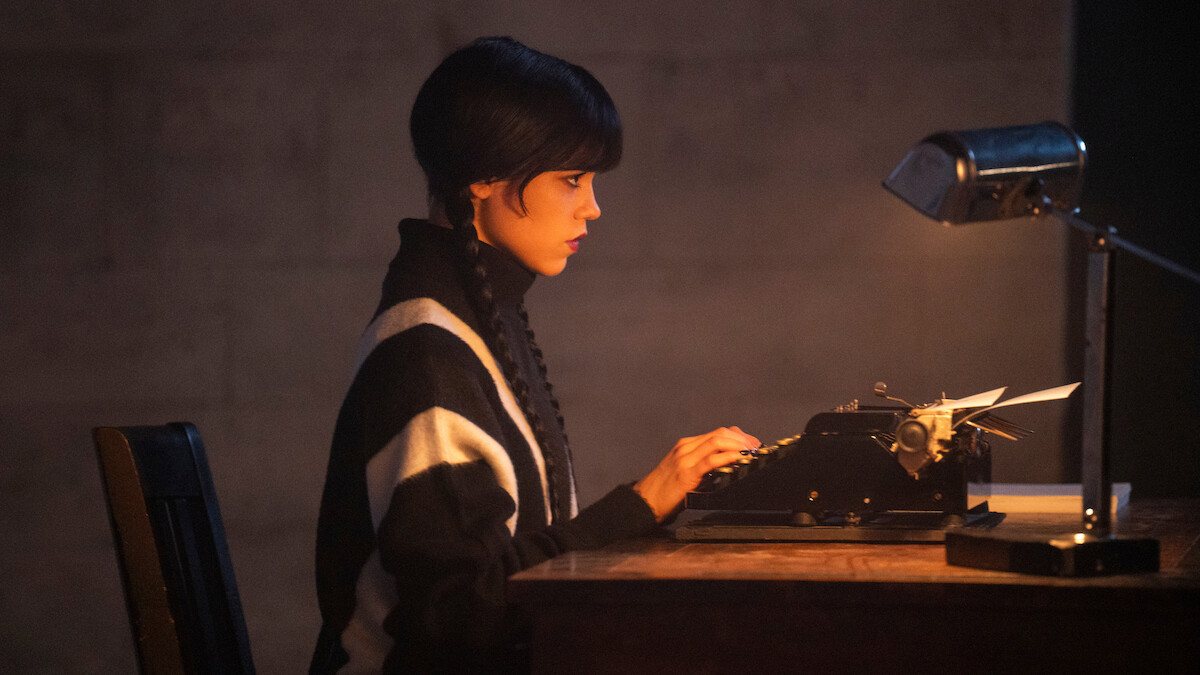
The gates of Nevermore Academy have closed on another season of filming.
Netflix confirmed that production on Wednesday Season 3 officially wrapped on September 30, 2026, marking another milestone for the gothic series starring Jenna Ortega.
The third season returned to the Dublin area of Ireland, where the production continued expanding the elaborate world of the Addams family.
But when a show like Wednesday finishes filming, the physical production doesn't simply disappear.
Behind the scenes, thousands of decisions remain about costumes, props, set dressing and the objects that helped bring the fictional world to life.
Building the World of Nevermore
Wednesday has a distinctive visual identity.
Its gothic architecture, unusual classroom objects, elaborate wardrobe and macabre decorative details all help make Nevermore Academy recognizable.
Creating that world requires multiple departments.
Production designers establish the visual environment.
Set decorators select and arrange objects within it.
Prop departments provide items that actors handle or interact with.
Costume departments develop clothing that communicates each character's personality.
Together, those elements make a fictional school feel like a real place.
The Importance of Physical Props
Not everything audiences see in a fantasy television series is created digitally.
Physical objects remain important because actors need items they can hold, move and interact with.
Wednesday's second season included an elaborate Clockwork Heart assembled with found objects and mechanical details.
Objects like these demonstrate the collaboration between designers, fabricators and practical-effects teams.
Even when digital effects are added later, physical elements can help performers and camera crews establish how a scene should look and feel.
Costumes Tell Their Own Story
Wednesday Addams has one of television's most recognizable contemporary wardrobes.
Her preference for dark clothing creates an immediate visual contrast with many of the characters around her.
But costume design extends far beyond the leading character.
Every uniform, accessory, formal outfit and background costume contributes to the world of Nevermore.
Productions may also need multiple examples of important garments.
Some are prepared for stunt sequences, while others serve as backups or accommodate specific scenes.
The finished episode may present one continuous outfit even when several physical versions were involved.
What Happens When Filming Wraps?
After principal photography ends, productions must account for their remaining physical assets.
Wardrobe can be inventoried and returned to storage.
Rented pieces may go back to their original suppliers.
Reusable set dressing might be transferred into stock.
Custom-built props may be retained for future seasons, publicity, exhibitions or archival purposes.
Other objects can eventually be sold, donated or disposed of according to production policies.
The exact destination depends on ownership, contracts and the production's future needs.
Because Wednesday is an ongoing series, retaining important objects for continuity is particularly relevant.
Why Documentation Matters
Imagine finding a mysterious object labeled only "Wednesday" several years from now.
Without additional information, it might be difficult to determine whether the piece was used on camera, prepared as a backup or simply acquired for the production.
Inventory records, continuity photographs and prop-department paperwork can help answer those questions.
The same applies to costumes.
A wardrobe label can establish an association with a character or performer, but it does not necessarily prove that a garment appeared in the finished episode.
Collectors benefit when that distinction is preserved.
The Difference Between Production-Acquired and Screen-Used
Production-acquired describes an object's documented connection to a production.
Screen-used or screen-worn makes a more specific claim about its appearance or use during filming.
Those descriptions should not be treated as interchangeable.
A costume purchased for Wednesday might have been prepared but never filmed.
Another example could have been used in a deleted scene.
A third might be identifiable in the final episode.
Each can have an authentic production history, but the evidence supports different descriptions.
The Next Chapter for Nevermore
Netflix has announced several new cast members for Season 3, including Winona Ryder, Eva Green, Lena Headey and Chris Sarandon.
The expanding cast suggests more opportunities for new characters, settings and visual designs.
That also means additional physical production material.
New wardrobe.
New props.
New set decoration.
And eventually, more objects that may become important to fans and collectors.
Preserving the World Beyond the Screen
Television audiences experience a production as a finished episode.
But the physical world behind it continues to exist after filming.
Costumes remain in wardrobe storage.
Props are packed into containers.
Set pieces are dismantled or retained.
Photographs and paperwork document how everything came together.
For a series as visually distinctive as Wednesday, those objects represent an important part of its creative history.
The cameras may have stopped rolling on Season 3, but the story of its physical production assets is far from over.