
David Bowie's Original Costumes and Labyrinth Artifacts Go on Display at V&A Dundee
A new exhibition at V&A Dundee brings together more than 100 objects from David Bowie's archive, including original costumes, Labyrinth production materials and artifacts from The Man Who Fell to Earth.
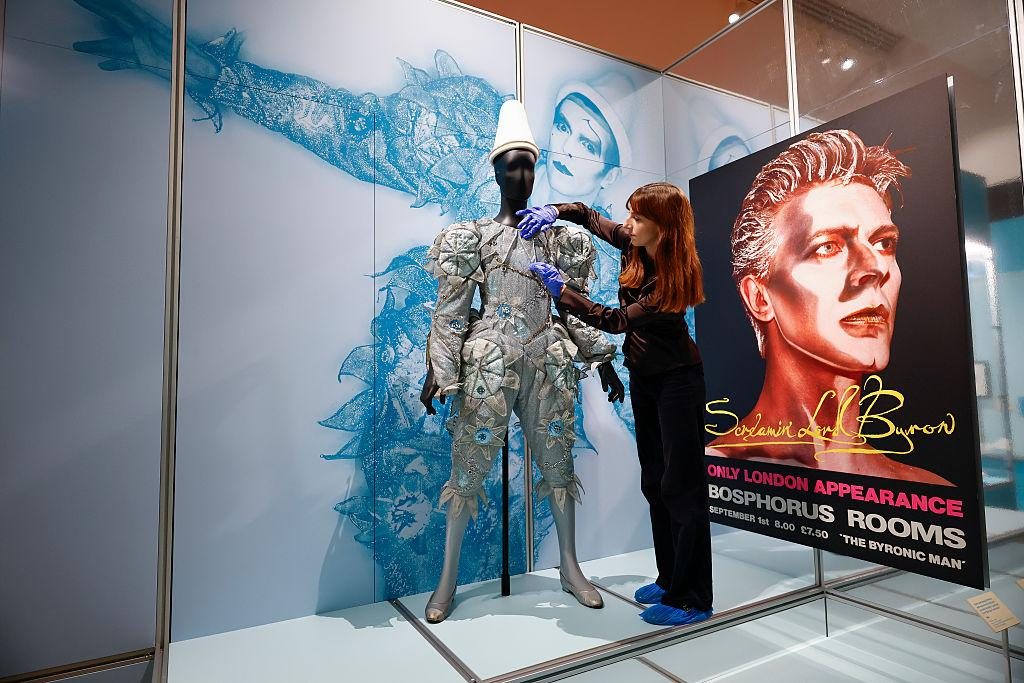
Some of the most recognizable objects from David Bowie's extraordinary career have returned to public view.
On November 4, 2026, V&A Dundee opened David Bowie: On Tour, an exhibition featuring more than 100 objects drawn from the musician and actor's extensive personal archive.
The collection includes original costumes, handwritten materials, instruments, photographs and personal possessions.
For film and television memorabilia collectors, several of the most significant objects relate to Bowie's work on screen.
Among the highlights are materials from the 1986 fantasy film Labyrinth, a clapperboard associated with The Man Who Fell to Earth and the original costume created for his Ashes to Ashes music video.
Together, the objects demonstrate how an entertainment archive can preserve not only the finished appearance of a performer but also the creative process behind it.
More Than 100 Objects From David Bowie's Archive
David Bowie: On Tour is the first stop on a new UK-wide exhibition program organized around the V&A's David Bowie archive.
The Dundee presentation runs from November 4, 2026, through February 15, 2027.
Its exhibits span Bowie's career in music, fashion, film and television.
Visitors can see costumes, instruments, handwritten lyrics, photography and personal objects that document his constantly evolving artistic identity.
Some of the materials have never previously been displayed publicly.
The exhibition is organized into four sections examining photography, performance, screen work and personal creativity.
For collectors, this arrangement demonstrates the importance of preserving related objects together.
A costume may become more meaningful when displayed alongside the drawings, photographs or notes that explain its creation.
Labyrinth: A Rare Look at Jareth's Development
One of the exhibition's most intriguing sections focuses on Bowie's screen career.
The display includes a script containing his notes for Jareth, the Goblin King he portrayed in Jim Henson's 1986 fantasy film Labyrinth.
It also features character notes and Polaroid photographs documenting costume fittings.
These objects provide a direct connection to the film's development.
Jareth's appearance is among the most recognizable elements of Labyrinth.
His elaborate wardrobe, distinctive hairstyle and theatrical presentation helped establish the character's identity.
Costume-fitting photographs can reveal how that appearance evolved before filming.
They may document changes in silhouette, accessories, fabrics or other visual details.
For film historians, such photographs can be valuable evidence of the creative process.
They help connect a finished costume design to the decisions made during production.
Why Costume-Fitting Photographs Matter
Collectors often focus on the finished costume seen on screen.
However, production documentation can be equally important.
A fitting photograph may show a garment before alterations were completed.
It can reveal how clothing was adjusted for an individual performer.
It may also establish that a particular design existed during a specific stage of production.
When authenticating an original costume, this kind of material can help distinguish a final garment from a prototype, backup or unused design.
The presence of Bowie's Labyrinth fitting Polaroids in a museum archive demonstrates how seemingly ordinary production records can acquire lasting historical significance.
The Man Who Fell to Earth Clapperboard
The exhibition also includes a clapperboard associated with The Man Who Fell to Earth.
The 1976 science-fiction film, directed by Nicolas Roeg, featured Bowie as Thomas Jerome Newton.
A clapperboard is a production tool used to identify shots and assist with synchronizing picture and sound.
Although it may appear ordinary, a clapperboard can provide a direct physical connection to the filmmaking process.
Its markings may contain production information, depending on how it was used and preserved.
For collectors, clapperboards represent a distinct category of movie memorabilia.
They are production equipment rather than conventional character props.
Their significance comes from their documented association with the filmmaking process.
The exhibition confirms the presence of a clapperboard connected to The Man Who Fell to Earth, but the publicly available description does not establish its use in a particular scene or on a particular shooting day.
The Original Ashes to Ashes Costume
Another major highlight is Bowie's costume from the 1980 Ashes to Ashes music video.
Designed by Natasha Korniloff, the elaborate outfit helped establish one of Bowie's most memorable visual identities.
The costume demonstrates how music-video wardrobe can become as historically significant as clothing from a feature film.
Although music videos are often shorter productions, their costumes can be central to the finished work.
A distinctive garment may define an entire visual era.
The survival of Bowie's Ashes to Ashes costume allows visitors to examine the physical craftsmanship behind an image that has remained recognizable for decades.
It also illustrates why music-video artifacts deserve consideration within the broader field of screen-used entertainment memorabilia.
From Ziggy Stardust to the Silver Screen
The exhibition extends beyond Bowie's film roles.
Visitors can also see a lightning-bolt stage costume associated with the Ziggy Stardust tour, a guitar from the Ziggy Stardust era and other objects documenting his performances.
These materials reveal the relationship between his musical identity and his screen work.
Bowie frequently used costume, makeup and theatrical presentation to create distinct characters.
His work crossed boundaries between concert performance, music video, photography and cinema.
Preserving those objects together helps explain how his visual identity developed across different media.
Why Original Archives Are Important
An archive is more than a collection of recognizable objects.
It preserves relationships among materials.
A script, costume, fitting photograph and personal note may each tell a different part of the same story.
When those objects remain connected through reliable documentation, researchers can better understand how a production developed.
Separating an artifact from its supporting records can make that history more difficult to reconstruct.
This is particularly important for original costumes and props, which may resemble later reproductions or alternate production versions.
A well-documented archive can preserve information that would otherwise be lost.
The Difference Between Museum Objects and Collectibles
An original production artifact displayed in a museum is not necessarily available for private purchase.
Museums and institutional archives may retain objects for research, preservation and public exhibition.
Collectors should not assume that an exhibited costume or prop has been released for sale or transferred from its archive.
In the case of David Bowie: On Tour, the objects are presented as part of the V&A's David Bowie archive.
Their exhibition does not indicate that they are being offered to the memorabilia market.
Their significance lies in their historical association and the documentation preserved alongside them.
Preserving Costumes for Future Generations
Original performance costumes can present significant conservation challenges.
Textiles may contain delicate embellishments, adhesives, metallic components or materials that react differently to light and humidity.
Garments may also retain evidence of alterations, repairs or wear from their original use.
Those details can be historically important.
Conservation decisions should consider the object's materials, condition and documented history.
The goal is not necessarily to make a costume look new.
It is to preserve the artifact and the evidence it contains.
A Rare Opportunity to See Screen History Up Close
David Bowie: On Tour demonstrates how much can be learned from the objects artists leave behind.
The Labyrinth script and fitting photographs reveal elements of character development.
The Man Who Fell to Earth clapperboard connects to the physical process of filmmaking.
The Ashes to Ashes costume preserves the craftsmanship behind an unforgettable visual performance.
Together, they illustrate why original production materials deserve careful documentation and preservation.
For collectors and film historians, these objects are more than memorabilia.
They are surviving records of creative decisions, technical work and cultural history.
And by bringing them into public view, the V&A allows a new generation to encounter the physical artifacts behind some of Bowie's most recognizable performances.