
How Brothers Turned Cowboy Hats and Worn-Out Jeans Into Character-Defining Costumes
Costume designer Colin Wilkes reveals how carefully distressed jeans, custom cowboy hats and vintage clothing helped define Matthew McConaughey and Woody Harrelson's contrasting characters in the Apple TV series Brothers.
Sometimes the most complicated costume on television is a pair of blue jeans.
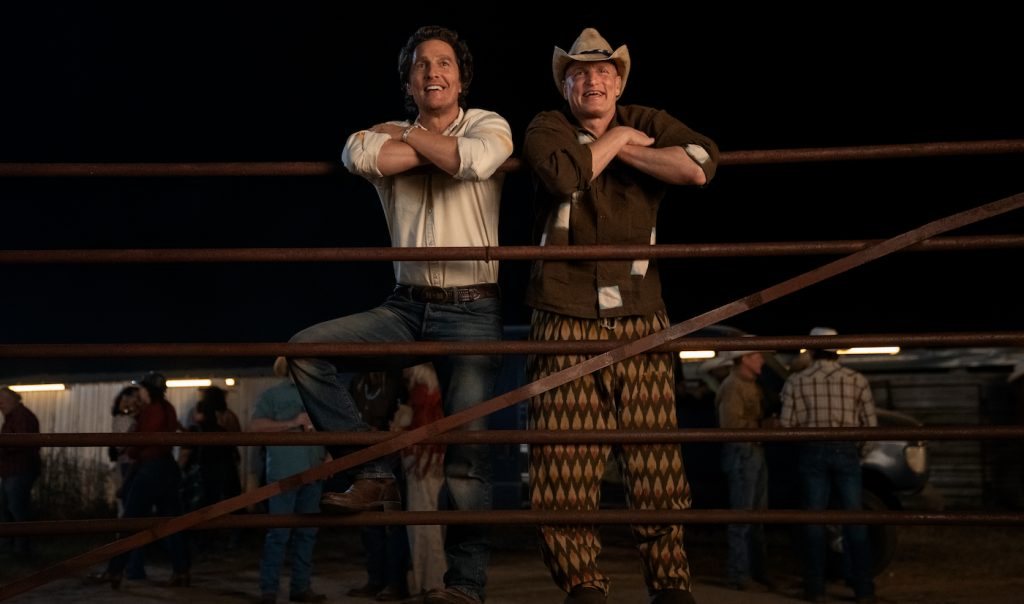
In Apple TV's Brothers, Matthew McConaughey and Woody Harrelson play fictionalized versions of themselves, bringing their familiar personalities into a comedy built around the possibility that they share the same father.
Their clothing might initially seem like something the actors simply pulled from their own closets.
But costume designer Colin Wilkes approached those familiar looks with considerable planning, research and craftsmanship.
In a recent interview with the Motion Picture Association, Wilkes explained how the production used clothing to establish two very different personalities.
The details offer an excellent example of why ordinary-looking production wardrobe can be just as interesting as an elaborate superhero costume.
Two Characters, Two Completely Different Wardrobes
McConaughey's character embraces a recognizable Texas aesthetic.
Well-fitting jeans, cowboy hats and boots create a practical, traditional appearance.
Harrelson's wardrobe moves in another direction.
Looser clothing, patterned fabrics and relaxed footwear reflect a more casual, environmentally conscious personality.
These differences help establish the characters' contrasting attitudes.
Even when neither actor says anything, audiences can recognize their personalities through their clothes.
That is costume design doing its job.
Six Pairs of Jeans That Had to Look the Same
One of the most revealing details from Wilkes' interview involves McConaughey's jeans.
The actor preferred a particular fit associated with older Double RL denim.
The costume department couldn't simply purchase the exact vintage pairs needed for filming.
Instead, it acquired newer jeans and had them altered.
The garments were stonewashed, dyed and distressed to create the appearance of clothing that had already been worn for years.
Approximately six pairs were prepared to match.
That last detail is particularly important.
Audiences may see one pair of jeans throughout a sequence, but the production might need several physically separate garments that appear identical.
Why Costume Multiples Matter
Costume continuity can be surprisingly complicated.
A scene might be filmed over several days.
An actor could wear a garment during an action sequence that causes damage.
A costume might need to be cleaned or repaired between takes.
Having duplicates helps a wardrobe department maintain the same appearance throughout filming.
But making multiple garments match isn't always easy.
Denim fades differently.
Distressing produces unique marks.
Fabric responds differently to washing and dyeing.
A wardrobe department must carefully coordinate those details so viewers don't notice the change.
For collectors, those subtle differences can later become valuable identification clues.
A Cowboy Hat With Its Own History
The cowboy hats featured in Brothers provide another example of the production's attention to detail.
McConaughey's hat was developed with assistance from an Austin hatmaker familiar with the actor's preferences.
The costume department also incorporated distinctive decorative elements.
Harrelson's hat had a very different origin.
Because the actor avoids animal-derived materials, the team looked for an appropriate straw hat.
They eventually discovered a vintage example in a rental house.
It already possessed the worn appearance the character needed.
After adjustments to its fit, the hat became part of the production wardrobe.
This illustrates an important distinction in movie memorabilia.
An item doesn't need to be manufactured specifically for a film or television series to become genuine production wardrobe.
Sometimes the perfect costume is an existing object that a designer selects, modifies and incorporates into the production.
Costume Distressing Versus Actual Damage
The artificially aged jeans demonstrate a subject that is especially important for collectors.
Not every stain, faded area or worn edge represents damage that occurred after filming.
Sometimes those characteristics were deliberately created by the costume department.
Distressing can involve washing, dyeing, sanding, cutting, painting and other techniques.
The goal is to make clothing look as though it has lived alongside the character for years.
For original wardrobe, those marks can be part of the object's production history.
Attempting to clean or restore a garment without understanding its original appearance could remove important evidence.
The Small Details Matter
Wilkes also discussed the wardrobe of Ma Mac, played by Holland Taylor.
Her jewelry, accessories, patterns and metallic colors help communicate the character's personality.
Some pieces were sourced through secondhand shopping, while others required work from local craftspeople.
Those details demonstrate how costume design combines commercial clothing, vintage pieces, handmade accessories and custom alterations.
A finished character's wardrobe may represent contributions from several different artists and suppliers.
When Everyday Clothing Becomes Movie Memorabilia
An ordinary pair of jeans may have relatively little value when purchased from a store.
But the same style of jeans, once documented as part of a recognizable television production, has a different historical context.
That doesn't mean every identical retail example is production wardrobe.
Collectors should distinguish between same-make clothing, production-acquired pieces and garments with confirmed screen use.
Evidence might include wardrobe tags, studio documentation, continuity photographs or identifiable physical characteristics.
The more complete the provenance, the more confidently the object's history can be described.
A Costume Doesn't Have to Be Spectacular
The work behind Brothers is a reminder that memorable costume design isn't always flashy.
Sometimes it involves making six new pairs of jeans look equally old.
Sometimes it's finding the perfect hat at the bottom of a rental-house barrel.
And sometimes it's knowing exactly which accessories make a fictional character feel like someone audiences already recognize.
Those decisions become part of the production's physical history.
Long after the series ends, the garments can continue telling the story of how the characters were created.