
The Cat in the Hat Reveals How Hollywood Creates Movie Props Without Physical Sets
Warner Bros. Pictures Animation's new adaptation of The Cat in the Hat reveals how artists created an entire movie world digitally, raising new questions about preserving the original production assets of modern animated films.
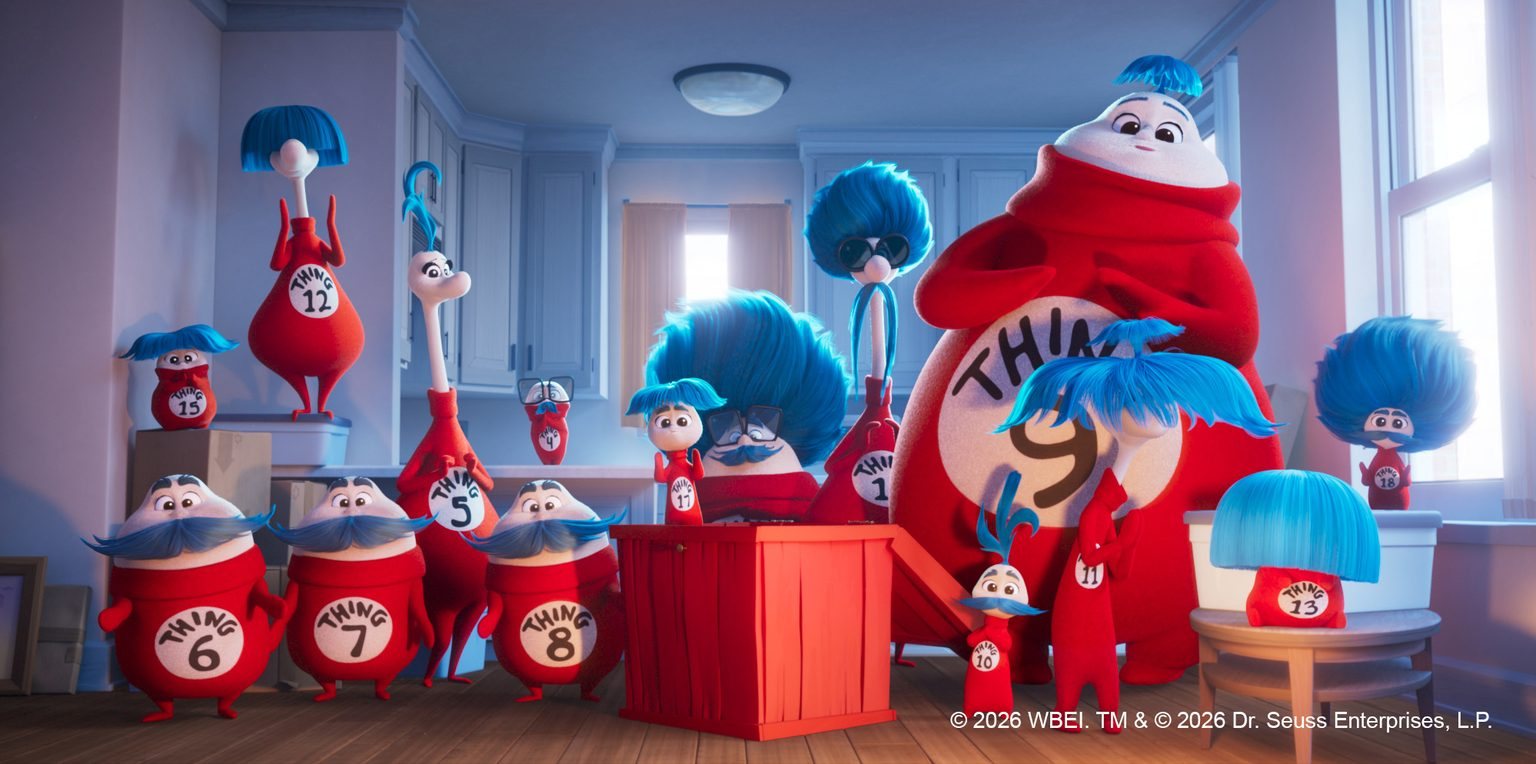
When audiences watch The Cat in the Hat, they see a world filled with imaginative characters, unusual environments and the unmistakable visual language of Dr. Seuss.
What they don't see is a traditional movie set.
Warner Bros. Pictures Animation's new adaptation, released in North American theaters on November 6, 2026, was developed through an extensive digital production process involving artists working across multiple continents.
Instead of constructing physical rooms, manufacturing props or dressing elaborate miniature sets, the filmmakers created their environments, characters and objects using computer-generated animation.
A new behind-the-scenes feature published by Autodesk on November 5 reveals how the production came together.
For collectors and film preservationists, the story raises an increasingly important question.
What happens to original movie props when those props exist entirely inside a computer?
Reimagining a Classic Children's Book
Directed by Alessandro Carloni and Erica Rivinoja, The Cat in the Hat expands the familiar Dr. Seuss story into a feature-length animated adventure.
Bill Hader voices the Cat, with a cast that also includes Quinta Brunson, Matt Berry, Xochitl Gomez, Giancarlo Esposito and America Ferrera.
The filmmakers faced an unusual creative challenge.
The original book is immediately recognizable, with distinctive shapes, exaggerated proportions and illustrations that have influenced generations of readers.
Recreating those illustrations in three dimensions required more than simply translating drawings into computer models.
The team needed to preserve the visual identity of Dr. Seuss while developing environments and characters capable of supporting a feature-length story.
Production designer Aidan Sugano helped establish that visual approach.
The result combines familiar Seussian design elements with new worlds created specifically for the film.
An Entire Production Built Digitally
According to Autodesk's November 5 production feature, the film's characters, environments and props were developed using Autodesk Maya.
Maya is a digital production application used to model, animate and manipulate three-dimensional objects.
For The Cat in the Hat, it served as a central part of the animation process.
Artists could create a character, design an environment or build an object without physically manufacturing it.
A table, chair, hat or other piece of set dressing could exist as a digital model.
Its appearance could then be adjusted through materials, textures, lighting and animation.
The finished object might look convincing on screen, but it would not necessarily have a physical counterpart.
This is a fundamental difference between computer-generated animation and traditional live-action filmmaking.
In a live-action production, a recognizable prop may survive as an object that can be stored, photographed or displayed.
In computer-generated animation, the original production asset may instead consist of digital files.
Five Worlds, One Visual Language
The production developed several distinct environments.
According to the filmmakers, the story includes a recognizable real world, a whimsical Dr. Seuss-inspired world and three additional worlds connected to the characters.
Each environment required its own visual identity.
Color, lighting, surface treatments and rendering techniques helped distinguish the different settings.
The challenge was maintaining a consistent design language while allowing the audience to recognize when the story entered a different world.
That process is comparable to production design in live-action filmmaking.
A physical production designer might select furniture, wallpaper, architectural details and lighting fixtures to establish a location.
An animation production designer makes many of the same creative decisions.
The difference is how those decisions are realized.
Instead of acquiring or constructing physical objects, digital artists build and refine virtual assets.
What Is an Original Digital Movie Prop?
The term "original movie prop" traditionally refers to a physical object created or acquired for use in a production.
A recognizable weapon, piece of furniture or personal accessory may have been handled by an actor or placed on a set.
Its authenticity can sometimes be established through studio records, production photographs or physical identifying characteristics.
Digital productions introduce a different category of original material.
A computer-generated prop may exist as a three-dimensional model with associated textures, materials, animation controls and other files.
These elements can represent genuine production-created assets.
However, they are not physical screen-used props.
A digital model used in a completed animated film is better described as an original digital production asset.
The distinction matters because a later three-dimensional print of that model would not automatically become an original screen-used prop.
It would be a physical reproduction derived from digital material.
The Hidden Work Behind a Single Animated Object
One of the most revealing details in Autodesk's coverage concerns how many people can contribute to an apparently simple object.
The filmmakers described how even a small story element, such as a scarf, could require work across numerous departments.
An object might begin as a concept.
It would then need to be designed, modeled, prepared for animation and integrated into the lighting and rendering process.
Changes made by one department could affect the work of several others.
The production used Autodesk Flow Production Tracking to manage those relationships.
This allowed teams to track characters, environments, props and successive versions of production assets.
The system was particularly important because artists were working across Los Angeles, India, Montreal and London.
The film was completed on an approximately two-year production schedule.
Why Digital Production Archives Matter
For decades, film preservation has often centered on physical objects.
Studios and archives may retain costumes, props, set-design drawings, models, scripts and production photographs.
Computer-generated filmmaking expands the range of materials that may deserve preservation.
Digital models, concept artwork, animation files and production records can document how a film was made.
However, saving a digital file is not necessarily the same as preserving a usable production asset.
A file may depend on particular software, plugins, linked textures or other technical resources.
As software changes, some files may become difficult to open or reproduce accurately.
Long-term digital preservation therefore requires careful documentation, file management and planning for technological change.
An archive may need to preserve not only the final model but also information about the software and production environment in which it was created.
Can Digital Production Assets Become Collectibles?
Original animation artwork has long been an important category of entertainment memorabilia.
Traditional animation can leave behind hand-painted cels, production drawings, backgrounds and other physical materials.
Computer-generated animation creates a different collecting landscape.
Digital concept artwork and production documentation may have historical significance, but ownership and authenticity require careful consideration.
A copy of a digital file is not automatically an authorized original collectible.
Studios may retain intellectual-property rights, control distribution or restrict access to production materials.
Even when a digital asset is legitimately transferred, its provenance should establish what was acquired and what rights accompany it.
Collectors should distinguish ownership of a digital file from ownership of the underlying character or intellectual property.
The Future of Screen History
The Cat in the Hat demonstrates how much physical filmmaking has changed.
Its imaginative world was created through the work of artists, animators and technical specialists rather than through traditional physical sets.
Yet the creative decisions remain remarkably familiar.
Someone still designs the furniture.
Someone determines how a room should look.
Someone decides how a character's clothing should move.
The artistry has not disappeared.
It has moved into a different medium.
For film historians, collectors and archives, the challenge is ensuring that this work can be documented and preserved.
As more productions rely on computer-generated environments and objects, the definition of an original production artifact will continue to expand.
The future of movie memorabilia may include objects that never physically existed at all.