
The Diplomat's Costumes Reveal More Than Political Power
Costume designer Jenny Gering explains how clothing helps define the characters of Netflix's The Diplomat, revealing the extraordinary planning behind wardrobe that often looks effortlessly ordinary.
In a political drama, a character's clothing can communicate authority before a single word is spoken.
A perfectly tailored suit can suggest control. A practical jacket can communicate someone who has little patience for ceremony. An expensive dress can become a form of armor.
On Netflix's The Diplomat, those decisions are part of the storytelling.
Costume designer Jenny Gering recently discussed her work on the show's fourth season, including the complicated process of dressing Kate Wyler, played by Keri Russell, Hal Wyler, played by Rufus Sewell, and the political figures surrounding them.
The result is a fascinating look at how costume departments create clothing that feels natural while quietly communicating who holds power.
Clothing as a Character's Armor
The Diplomat follows characters who navigate international politics, personal relationships and shifting alliances.
Their wardrobes must work on several levels.
The clothing needs to feel appropriate for the professional environment, reflect the characters' personalities and support the emotional circumstances of individual scenes.
For Kate Wyler, that can mean clothing that communicates practicality rather than an interest in fashion for its own sake.
Other characters may embrace the polished appearance expected of powerful public figures.
Those contrasts help audiences understand relationships without requiring additional dialogue.
A costume is not simply something an actor wears. It is another way the production communicates character.
The Challenge of Dressing a Political Summit
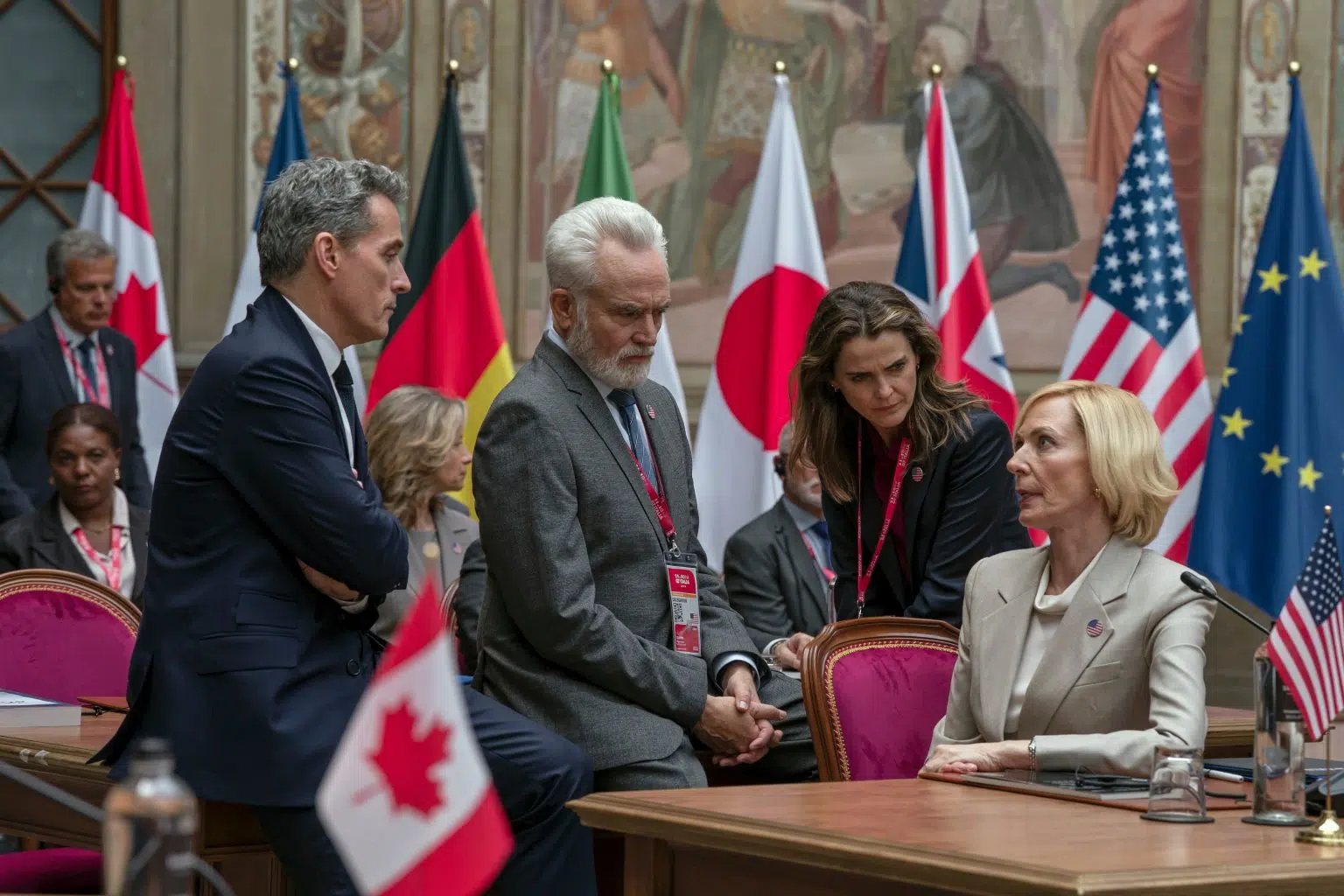
One of the most demanding assignments Gering discussed involved the season's G7 summit.
The production needed to dress an entire gathering of international political figures.
Unlike an ordinary scene featuring a handful of recurring characters, a major summit involves multiple wardrobe requirements, background performers and a consistent visual world.
Planning also began before every scene had been fully written.
That meant costume decisions had to anticipate the needs of scenes that were still developing.
For a costume department, preparation can begin long before the camera rolls.
Wardrobe Across Multiple Countries
The Diplomat's fourth season also presented logistical challenges because production activity involved New York, London and Florence.
Costume departments working across locations have to coordinate fittings, alterations, wardrobe transport and continuity.
An outfit prepared in one city may need to be available for filming somewhere else.
If a garment is altered, that change must be documented.
If a character wears the same clothing across scenes filmed weeks apart, the wardrobe team must maintain a consistent appearance.
What looks like a simple suit on screen can represent weeks of planning behind the scenes.
Why Productions Need Costume Multiples
Audiences generally assume that a character wearing the same outfit throughout a scene is wearing one physical garment.
That isn't always true.
Productions may acquire or manufacture multiples to accommodate stunt work, damage, continuity and scheduling.
An actor might need one garment for principal photography and another for a stunt sequence.
A costume could also require a backup in case something becomes damaged during filming.
For collectors, this distinction matters.
Two garments can both be genuine production wardrobe without having identical usage histories.
One might have been worn during principal photography, while another was prepared as a backup.
Establishing which example appeared on screen requires evidence specific to the individual garment.
What Makes Ordinary Clothing Collectible?
Some of the most interesting television costumes are not elaborate fantasy creations.
They are ordinary clothes selected and modified to communicate character.
A blazer, dress or pair of shoes might be commercially available.
But once a garment enters a production, it can acquire a different history.
It may receive alterations, wardrobe identification, continuity documentation or distinctive wear.
That doesn't automatically establish that it was screen-worn.
Production-acquired wardrobe and confirmed screen-worn wardrobe are related but different descriptions.
The distinction depends on the available evidence.
The Details Collectors Should Preserve
Original television wardrobe can retain information that isn't immediately visible in a photograph.
Interior labels, handwritten wardrobe markings, alterations and repairs can help document an item's history.
Continuity photographs and production records may establish which character or scene a garment was associated with.
Collectors should be cautious about removing labels or reversing alterations simply to make an item look newer.
Those details may be part of what makes the garment historically significant.
The Invisible Work Behind the Image
The most successful costume design doesn't always call attention to itself.
Sometimes its greatest achievement is making a fictional character look completely believable.
The Diplomat demonstrates how much research, coordination and craftsmanship can be hidden inside clothing that audiences might initially consider ordinary.
When those garments eventually leave a production, they represent more than fashion.
They become physical records of the choices that helped create the characters audiences remember.