
Inside Wildwood's 200 Miniature Costumes: The Art of Dressing Stop-Motion Puppets
LAIKA's new stop-motion fantasy features more than 200 handcrafted costumes, revealing how miniature clothing, custom fabrics and painstaking continuity work help bring animated characters to life.
A movie costume doesn't have to be life-size to represent an extraordinary amount of craftsmanship.
At LAIKA, the Oregon-based animation studio behind Coraline, ParaNorman and Kubo and the Two Strings, costume designers face a challenge unlike almost anything found in traditional live-action filmmaking.
Their performers are puppets.
Their garments are miniature.
And every fold, button, stain and movement must remain believable across thousands of individually photographed frames.
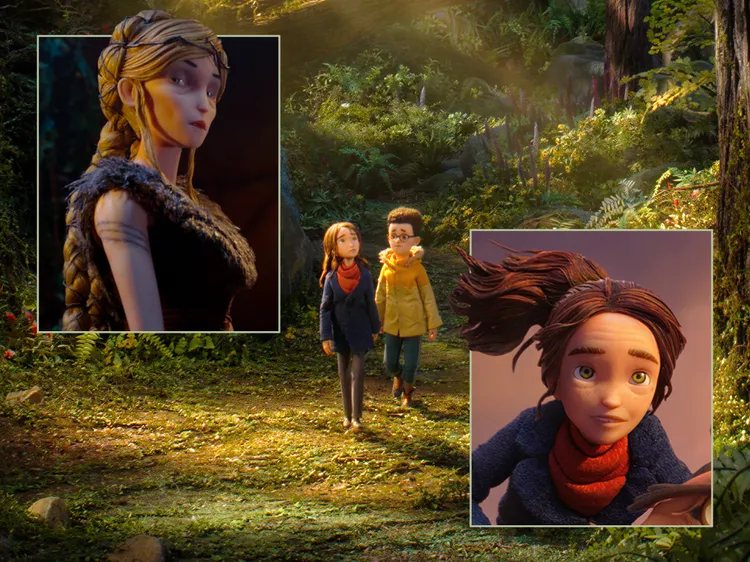
For the studio's newest feature, Wildwood, the costume department created more than 200 outfits using an astonishing range of custom materials and specialized techniques.
The film opened in U.S. theaters on October 23, 2026, bringing years of handcrafted production work to the screen.
A recent behind-the-scenes feature from InStyle offers a closer look at the artists responsible for dressing its characters.
For fans of original movie props and costumes, their work raises an interesting question: What does a genuine screen-used costume look like when the performer is only inches tall?
A Costume Department Working in Miniature
Wildwood follows Prue McKeel, a teenager who ventures into a mysterious forest after her younger brother is abducted by crows.
The fantasy adventure is based on the novel by Colin Meloy and was directed by Travis Knight.
Its elaborate world includes human characters, animals and fantastical creatures, all brought to life through stop-motion animation.
Unlike computer-generated characters, LAIKA's puppets physically exist.
They are constructed, dressed, positioned and photographed on miniature sets.
That means their clothing must function as real wardrobe, even when the garments are only a fraction of the size of something a person would wear.
The Wildwood costume department created more than 200 costumes for the production.
According to InStyle's October 23 feature, virtually all the fabric used for those costumes was produced in-house.
The reported exception was a single pair of socks made from commercially purchased fabric.
It is an extraordinary level of customization for garments that audiences may see for only moments.
Why Ordinary Fabric Doesn't Always Work
One of the challenges of miniature costume design is that materials do not automatically behave the same way at smaller scales.
A fabric that drapes naturally on a human performer may appear bulky or stiff when reduced to puppet size.
A seam that looks unobtrusive on a full-size jacket can become disproportionately large.
Even a tiny button can change how a miniature garment moves.
Costume artists must therefore consider more than appearance.
They need materials that can be manipulated repeatedly while maintaining the visual characteristics required by the animation.
Specialized techniques help achieve the illusion of ordinary clothing.
The Wildwood team used fine threads, miniature tools and custom-made textiles to create garments that could withstand the demands of production.
The result is clothing that appears familiar on screen, despite being engineered for an unusually demanding filmmaking process.
Every Frame Creates a Continuity Challenge
In live-action filmmaking, an actor can walk across a room while a camera records the movement continuously.
Stop-motion animation works differently.
Animators adjust a puppet's position, capture an image and repeat the process.
When those images are played in sequence, the character appears to move.
But the process creates a challenge for costume departments.
Fabric can shift between photographs.
A sleeve might fall differently.
A coat could develop a fold that wasn't present in the previous frame.
When those changes occur unintentionally, they can create visible inconsistencies in the finished animation.
The phenomenon is sometimes called chatter.
To reduce these problems, miniature garments may require reinforcement or internal structures that allow animators to control how the fabric behaves.
A costume must look natural while remaining predictable enough to animate.
That combination requires both artistic judgment and technical precision.
More Than 200 Physical Costumes
The scale of Wildwood's costume work becomes even more impressive when considered alongside the rest of the production.
Entertainment Weekly reported that the film involved 132 practical sets, 236 puppets and more than 140,000 individually 3D-printed facial expressions.
Those figures demonstrate how many separate physical components can contribute to a single animated feature.
A character is not simply one object.
Its appearance may involve a puppet body, interchangeable facial components, specialized clothing and accessories.
Different versions can be required to accommodate particular actions or filming conditions.
For collectors, this is an important distinction.
A miniature garment made for an animated production can have a legitimate production history even when it was never worn by a human performer.
Its significance comes from its role in creating the film.
Why Costume Multiples Matter in Animation
Live-action productions frequently prepare multiple versions of important costumes.
A principal garment may have backups for stunt work, continuity or damage.
Stop-motion productions can face similar requirements, although the reasons may differ.
A production may use multiple puppets representing the same character.
Different puppets might be constructed for specific actions, camera setups or animation requirements.
Their costumes must maintain a consistent appearance.
That means wardrobe artists may need to reproduce tiny details across separate garments.
A difference in fabric texture or distressing that seems insignificant in person could become noticeable when photographed in close-up.
Matching miniature costumes is therefore not simply a matter of making them the same size.
The garments must also respond to animation in a visually consistent way.
Distressing Is Part of the Design
Costume design also communicates what a character has experienced.
In Wildwood, clothing helps establish personalities and reflect changes throughout the story.
A character's appearance may evolve as the adventure becomes more dangerous.
Garments can acquire dirt, wear or other visual details that support the narrative.
In a stop-motion production, those changes may need to be carefully controlled.
A stain cannot simply appear in a different location between frames.
An intentionally damaged sleeve must remain consistent with the character's actions and the sequence being filmed.
This has an important implication for the preservation of original production costumes.
What appears to be damage may actually be part of the artist's original design.
Cleaning or repairing a miniature garment without understanding its production history could alter the very details that made it suitable for filming.
Are Stop-Motion Costumes Original Movie Memorabilia?
Original production memorabilia is often associated with objects held by actors.
A costume worn by a recognizable performer.
A prop carried during a memorable scene.
A piece of set decoration visible in the background.
Stop-motion filmmaking expands that definition.
A puppet's clothing is a real physical object created for a film production.
The garment may have been fitted, altered, distressed and photographed during animation.
It can therefore represent an authentic piece of the film's production history.
However, the same standards of documentation still matter.
A costume manufactured for a production is not automatically confirmed to have appeared in the finished film.
An unused backup, a development prototype and a garment photographed during animation may each have different histories.
Collectors should look for evidence that identifies the specific object and explains how it was used.
The Importance of Preserving Miniature Artifacts
Miniature costumes can present unusual preservation challenges.
Their small size makes delicate construction details particularly vulnerable.
Fine stitching, decorative components and internal supports may be difficult to repair without changing the garment's appearance.
Materials may also respond differently to handling, humidity and long-term storage.
Original production documentation can help preserve the context surrounding these objects.
Costume sketches, fabrication notes, photographs and inventory records may reveal how an individual garment was constructed and which puppet or sequence it was intended to support.
Without that information, an intricate miniature costume could eventually become difficult to distinguish from a later replica.
Preserving the object and its documentation together provides a more complete record of the work behind the film.
The Artists Behind the Animation
Audiences often recognize stop-motion animation for its extraordinary puppets and elaborate miniature environments.
The costumes deserve equal attention.
Every tiny garment represents decisions about character, movement, color, texture and storytelling.
A coat must appear to have weight.
A sleeve must bend convincingly.
A piece of fabric must respond to an animator's movements without disrupting the illusion of life.
The artists creating those details may never appear on screen, but their work is present in nearly every frame.
When Movie History Fits in the Palm of Your Hand
Wildwood demonstrates that the physical scale of a production artifact has little relationship to the amount of craftsmanship it represents.
A miniature jacket may require specialized materials, custom fabrication and painstaking adjustments.
A tiny accessory can be as important to a character's appearance as a full-size prop.
And an outfit photographed frame by frame can become part of the permanent history of an animated film.
For collectors and preservationists, these objects offer a reminder that movie memorabilia extends far beyond the familiar world of live-action costumes.
Sometimes an extraordinary piece of screen history is small enough to fit in the palm of your hand.